
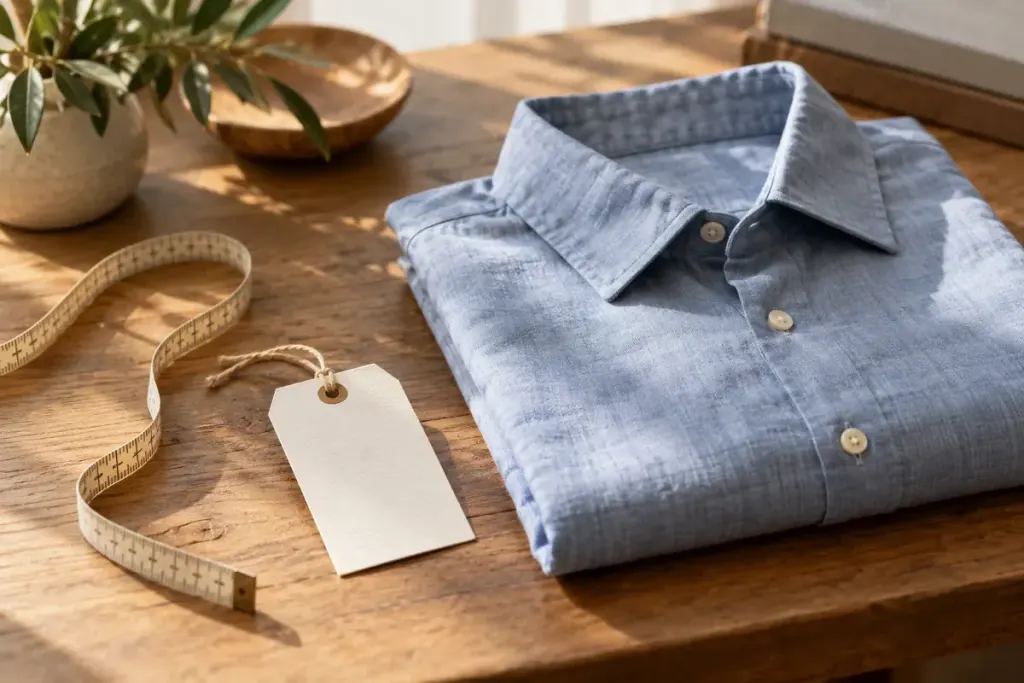
A shopper sees “chest: 52 cm” and cannot tell whether it describes a body circumference, a garment laid flat or a measurement taken at a particular seam. The number may be accurate while the guide still fails to answer the purchase question.
Start by deciding what each figure represents. Put that explanation beside the table, not in a distant returns page. If the table shows finished garment dimensions, say so plainly and distinguish them from body measurements.
Show the method, not just the tape
A useful diagram marks the start and end points. For a flat shirt measurement, explain whether the garment is laid naturally or stretched, which seams define the width and whether the displayed number is doubled.
Use a real product sample when checking the copy. Ask someone unfamiliar with the guide to take the measurement using only the published instructions. If they choose a different location, the wording or diagram needs work.
For an invented example, “Width across the chest, measured flat from underarm seam to underarm seam; do not double the listed figure” resolves several ambiguities that “chest size” leaves open.
Keep the comparison fair
Tell shoppers whether they should compare with their body or with a similar garment they already own. Those are different tasks. Include the measurement unit in the heading and keep conversions consistent across the table.
If a product has a stated manufacturing tolerance, explain it accurately using the supplier’s confirmed information. Do not invent a tolerance to excuse inconsistent stock, or promise an exact fit from one dimension alone.
- Use readable text alongside any diagram.
- Make the guide usable on a phone without hiding the unit.
- Link the guide to the actual product version.
- Update it when the supplier or pattern changes.
A support team can help identify the next improvement. Record the questions customers ask before returning an item: sleeve starting point, garment length or stretch method may be the real gap.
The strongest size guide reduces uncertainty before payment. It does not need an impressive amount of data; it needs a clear relationship between the product, the measurement method and the choice the shopper is trying to make.