
A Comprehensive Guide to Coffee Roast Levels and Flavors
Coffee roasting transforms dense green beans into the aromatic, flavorful beans used to prepare a daily cup. Although origin, variety, altitude, and processing method influence the final result, the roasting process determines how clearly those natural characteristics appear.
Every roast level creates a different balance of acidity, sweetness, bitterness, aroma, and body. Learning how these qualities develop makes it easier to select beans that suit your brewing method and personal preferences.
Understanding the Coffee Roasting Process
Green coffee beans have a mild grassy aroma and contain very little of the recognizable flavor associated with brewed coffee. During roasting, heat triggers chemical reactions that create hundreds of aromatic compounds.
As the temperature rises, moisture escapes from the beans. Sugars begin to caramelize, acids change, and the beans gradually shift from green to yellow, brown, and eventually deep brown. They also expand as internal pressure increases.
Roasters carefully control heat, airflow, and roasting time to develop the desired characteristics. Even a small adjustment can influence sweetness, clarity, body, and aftertaste.
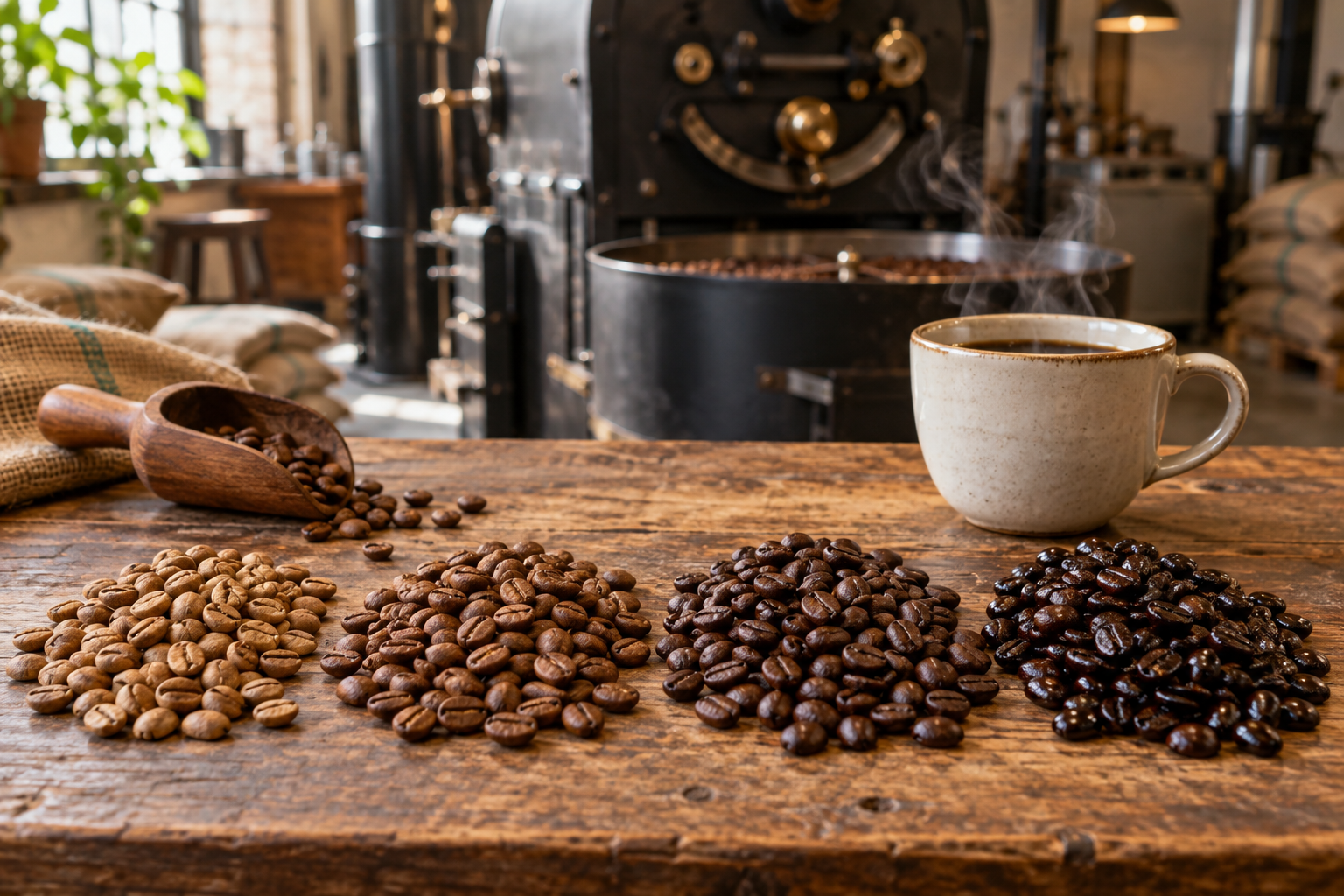
Understanding the main coffee bean roasting levels provides a practical starting point for choosing coffee. The categories are usually described as light, medium, medium-dark, and dark, though exact roasting standards may vary between roasters.
Light Roast Coffee
Light roast beans are removed from the roaster shortly after the first crack. This stage occurs when internal pressure causes the beans to expand and produce a distinct popping sound.
The beans normally have a light brown color and a dry surface because their oils remain inside. Light roasting preserves more of the coffee’s original character, making differences between growing regions easier to recognize.
Flavor Characteristics of Light Roasts
Light roasts often produce bright acidity, gentle sweetness, and delicate aromas. Depending on the beans, the cup may contain notes of citrus, berries, flowers, tea, honey, or fresh herbs.
These complex light roast flavor notes are especially noticeable when the beans come from a single farm or region. A light roasting approach allows qualities created by the soil, climate, altitude, and processing method to remain prominent.
However, light roast coffee can taste sharp or underdeveloped when roasted incorrectly. A skilled roaster must apply enough heat to develop sweetness without covering the bean’s natural identity.
Best Brewing Methods for Light Roasts
Pour-over brewers are excellent for light roast coffee because they highlight clarity and subtle aromas. AeroPress, siphon, and carefully prepared filter coffee can also deliver impressive results.
Light roasts usually benefit from slightly hotter water and a finer grind than darker beans. Proper extraction helps balance their natural acidity and brings forward their sweetness.
Medium Roast Coffee
Medium roast coffee offers a balance between origin character and flavors created during roasting. The beans are roasted beyond the earliest stage of first crack but are generally removed before the second crack begins.
They have a medium-brown appearance and usually remain free of visible surface oil. This level is popular because it produces an approachable cup without sacrificing too much complexity.
A well-developed medium roast coffee may feature flavors resembling caramel, roasted nuts, milk chocolate, ripe fruit, or brown sugar. Its acidity is softer than that of a light roast, while the body feels fuller and smoother.
Why Medium Roast Is So Versatile
Medium roast works with many brewing methods, including drip machines, pour-over brewers, French presses, and espresso equipment. Its balanced character also makes it suitable for drinking black or with milk.
For many coffee drinkers, medium roast provides the easiest introduction to specialty coffee. It offers enough sweetness and body to feel familiar while still revealing interesting characteristics from the bean’s origin.
The moderate development also creates a rounded finish. Instead of emphasizing one dominant quality, it brings acidity, sweetness, aroma, and body into a more harmonious relationship.
Medium-Dark Roast Coffee
Medium-dark beans are roasted close to or into the early stage of second crack. They have a deeper brown color and may display small patches of oil on the surface.
At this point, roasting flavors become more noticeable than the delicate characteristics of the green bean. Acidity decreases, body increases, and the cup develops a heavier presence.
Common tasting notes include dark chocolate, toasted nuts, caramelized sugar, warm spices, and subtle smokiness. A properly roasted batch should still maintain sweetness without tasting burnt.
These beans are often chosen for bold filter coffee and traditional espresso. Their fuller body performs well in milk-based drinks because the coffee remains noticeable after milk is added.
Exploring different coffee roast characteristics can help drinkers recognize why medium-dark beans feel richer than lighter options without reaching the intense bitterness associated with very dark roasting.
Dark Roast Coffee
Dark roast beans remain in the roaster through or beyond second crack. They develop a dark brown color, and natural oils often appear across the surface.
Longer exposure to heat reduces many origin-specific characteristics. Instead, the cup becomes dominated by flavors produced during roasting.
Dark roasts commonly feature smoky, bittersweet, cocoa-like, woody, or deeply caramelized notes. Acidity is usually low, while the body may feel heavy and bold.
Recognizing a Well-Roasted Dark Coffee
Dark coffee should not automatically taste burnt. A carefully managed roast can produce deep sweetness, a rich aroma, and a smooth finish. Excessive heat or poor timing, however, may create harsh bitterness, ash-like flavors, or an unpleasant oily character.
Freshness is particularly important because surface oils are exposed to air and can oxidize quickly. Dark roast beans should be stored in an airtight container away from heat, moisture, and direct sunlight.
French press, espresso, and moka pot brewing methods complement the intense dark roast coffee profile. These preparation styles emphasize body and create the strong cup preferred by drinkers who enjoy a more traditional roasted taste.
Light vs Dark Roast: The Main Differences
The comparison between light vs dark roast involves more than bean color. Each level changes how acidity, sweetness, aroma, body, and origin character are experienced.
Light roasts generally have brighter acidity and more noticeable fruit or floral qualities. Dark roasts offer lower acidity, heavier roasted flavors, and a bolder overall impression.
Medium roasts occupy the space between them, combining recognizable origin notes with caramelization and a rounder body. Medium-dark roasts lean further toward chocolate, spice, and toasted flavors.
One level is not objectively better than another. The best choice depends on the desired flavor and preparation method. Someone who enjoys a clean Ethiopian pour-over may prefer a light roast, while an espresso drinker seeking dark chocolate intensity may select a medium-dark blend.
How Roast Levels Shape Coffee Flavor Profiles
Coffee contains natural acids, sugars, and aromatic compounds that respond differently to heat. Early roasting preserves more acidity and regional distinction. Continued roasting increases caramelization and creates deeper flavors.
Eventually, heavy roasting begins to replace individual origin characteristics with flavors associated mainly with heat. This progression explains why dark beans from different regions can sometimes taste more similar than lightly roasted beans from the same locations.
Learning to identify coffee flavor profiles requires attention to aroma, acidity, sweetness, body, and finish. Instead of searching for an exact flavor, consider what the coffee reminds you of.
A citrus note does not mean citrus has been added. It describes a combination of brightness, sweetness, and aroma that creates a familiar sensory impression. Chocolate, nuts, berries, and spices are used in the same way.
Matching Roast Levels With Brewing Methods
Brewing style can strengthen or soften the qualities created during roasting. Pour-over methods emphasize clarity and work particularly well with light and medium roasts.
French press coffee retains more oils and fine particles, producing a heavier body that complements medium-dark and dark beans. Espresso uses pressure and concentrated extraction, making roast development especially important.
Cold brew usually tastes smooth and low in acidity. Medium to dark beans can create chocolate and caramel notes, while a carefully selected light roast may produce a brighter, fruitier result.
Choosing the right roast level for brewing also requires adjusting grind size, water temperature, and extraction time. Dark beans are more porous and extract quickly, while dense light roast beans often require more effort to release their flavor.
Freshness Matters at Every Roast Level
Even excellent beans lose aroma after roasting. Oxygen, heat, moisture, and light gradually weaken the volatile compounds responsible for flavor.
Whole beans generally stay fresh longer than ground coffee. Grinding immediately before brewing helps preserve aroma and allows the cup to express its intended character.
Coffee should be stored in a sealed, opaque container at a stable room temperature. Refrigeration is usually unnecessary for everyday storage because repeated temperature changes may introduce condensation.
Fresh beans also release carbon dioxide after roasting. Allowing a short resting period can improve brewing consistency, particularly for espresso.
Choosing the Right Roast for Your Taste
Begin with the flavors you naturally enjoy. If you prefer tea-like clarity, fruit, and floral aromas, try a light roast. If you want caramel sweetness and balance, choose medium.
Medium-dark coffee suits drinkers who enjoy chocolate, toasted nuts, and a fuller texture. Dark roast is ideal for those who prefer low acidity, smoky depth, and an intense roasted finish.
Trying several roast levels from the same origin is one of the best ways to understand how heat changes coffee. The comparison reveals which characteristics come from the bean and which develop inside the roaster.
Ultimately, roast labels serve as useful guides rather than strict guarantees. Paying attention to aroma, balance, mouthfeel, and aftertaste will help you discover a roast level that consistently makes your morning cup more enjoyable.