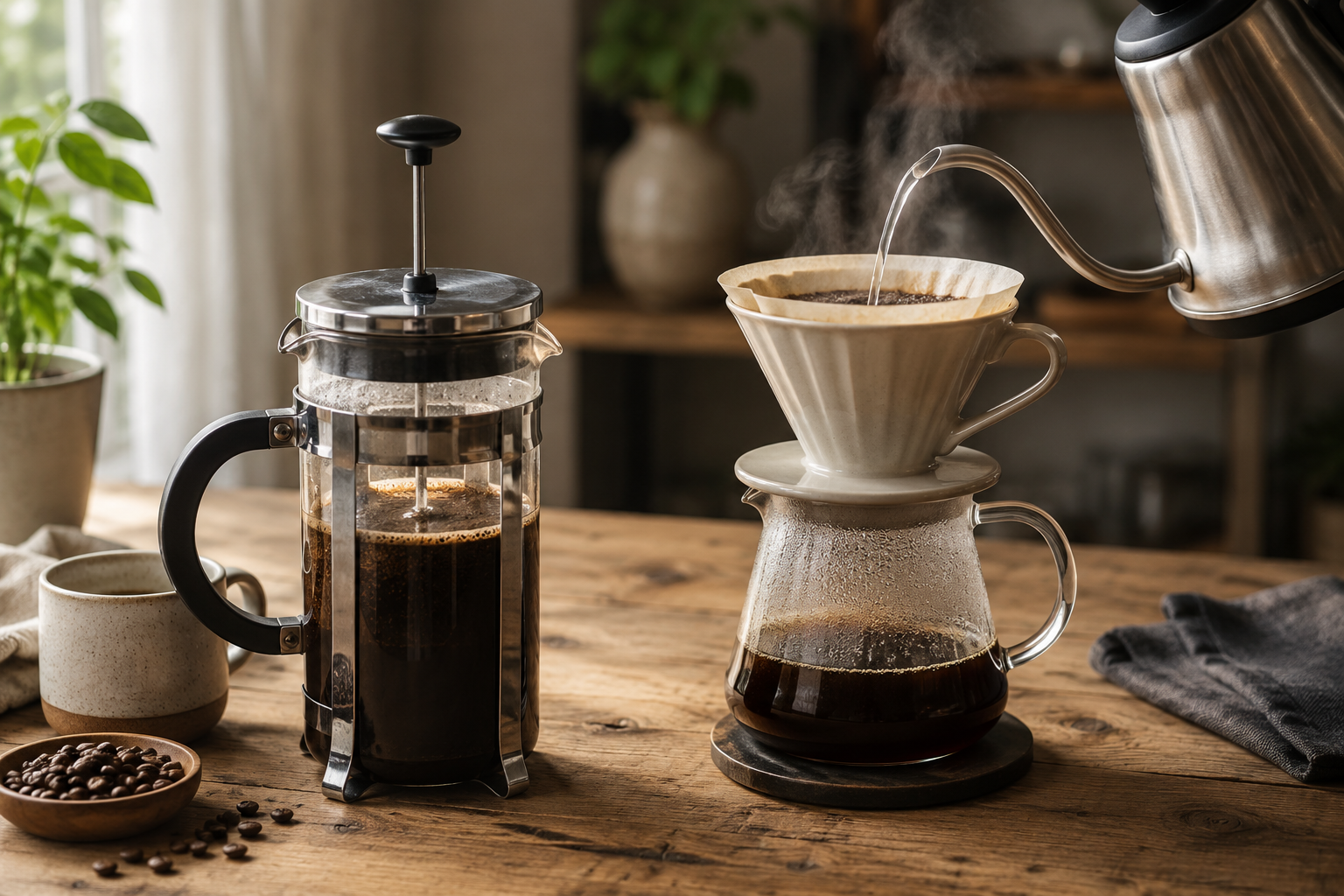
Choosing between a French press and a pour over can completely change the way your coffee tastes at home. Both methods are simple, affordable, and capable of producing an excellent cup, yet each highlights a different side of the beans.
French press coffee is typically rich, full-bodied, and deeply aromatic. Pour-over coffee tends to be cleaner, brighter, and more delicate. The right choice depends on your preferred flavor, morning routine, and willingness to control the brewing process.
This guide explores French press vs. pour over in detail, including flavor profiles, brewing times, equipment, grind size, and ease of preparation.
Understanding the French Press Brewing Method
A French press is an immersion brewer. Coffee grounds remain fully submerged in hot water throughout the brewing process before a metal mesh filter separates them from the finished drink.
This direct contact allows oils and extremely fine coffee particles to enter the cup. The result is a heavier texture and a more intense flavor than coffee made through a paper filter.
A standard French press usually consists of a heat-resistant glass or stainless-steel container, a lid, and a plunger fitted with a mesh filter. Its uncomplicated design makes it approachable for beginners.
For anyone building a personal home coffee brewing routine, the French press offers a satisfying combination of simplicity and bold flavor.
What Does French Press Coffee Taste Like?
French press coffee has a full, rounded body. Because the mesh filter retains natural oils from the beans, the finished cup often feels creamy and substantial on the palate.
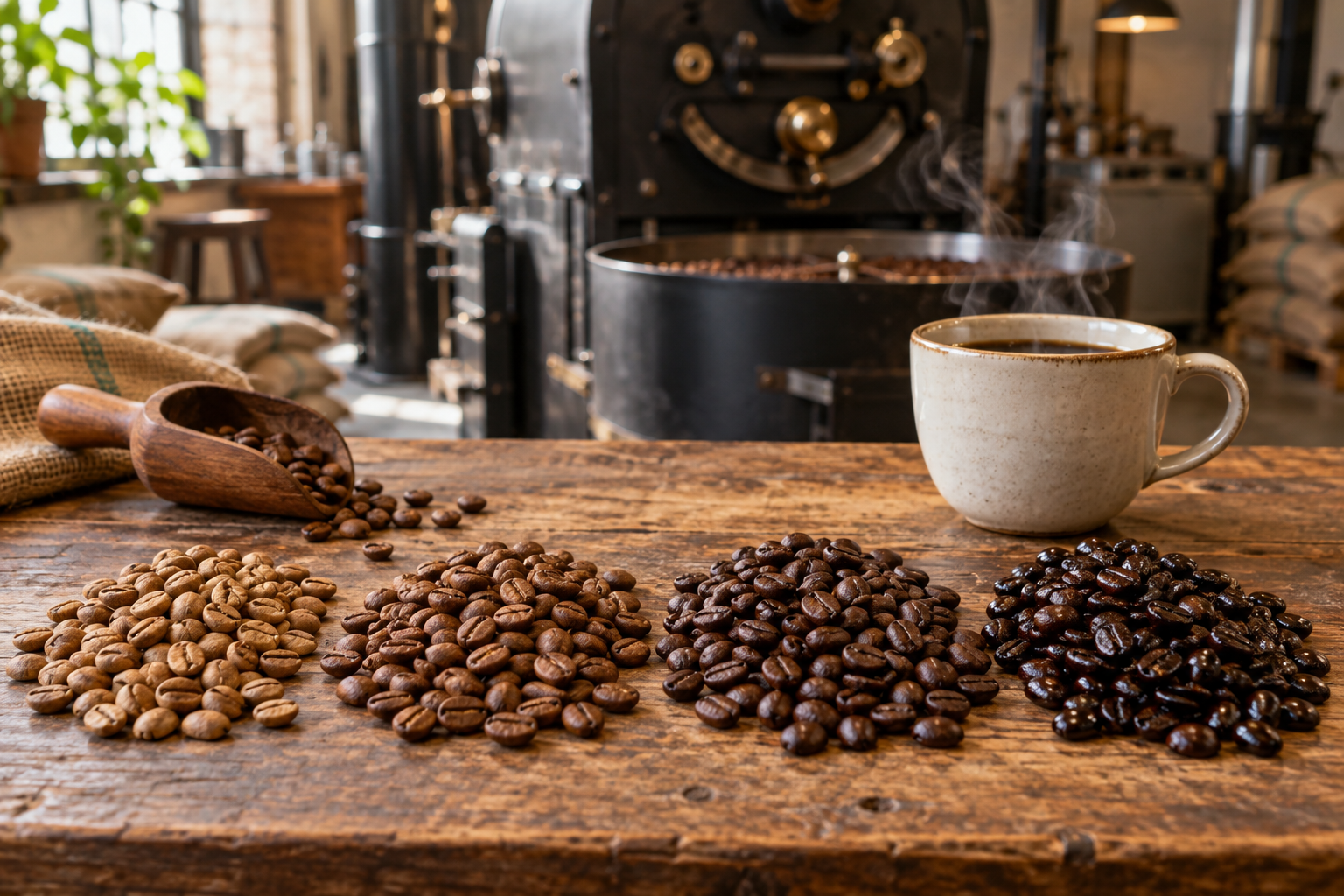
This method works especially well with medium-dark and dark roasts. Beans with tasting notes of chocolate, caramel, toasted nuts, warm spices, or molasses often become more pronounced.
Earthy and low-acidity coffees can also taste especially comforting when prepared in a French press. However, subtle floral or citrus characteristics may feel less defined because of the dense body and fine sediment.
How Long Does French Press Coffee Take?
The typical steeping time is about four minutes. Including water heating, grinding, pouring, and plunging, the complete process generally requires seven to ten minutes.
Preparation is straightforward:
- Preheat the French press with hot water.
- Add coarsely ground coffee.
- Pour hot water evenly over the grounds.
- Stir gently and place the lid on top.
- Let the coffee steep for approximately four minutes.
- Press the plunger down slowly and serve immediately.
Leaving brewed coffee inside the press can cause continued extraction, leading to bitterness. Pouring the entire batch into cups or a separate carafe prevents this problem.
Understanding the Pour-Over Brewing Method
Pour over is a percolation brewing method. Hot water travels through a bed of ground coffee before passing through a filter and dripping into a cup or carafe.
Unlike immersion brewing, the person preparing the coffee controls how quickly and evenly the water moves through the grounds. Pouring technique, grind size, and water flow all influence the final result.
Popular pour-over brewers usually have a cone-shaped or flat-bottomed design. Most use paper filters, although reusable cloth and metal filters are also available.
Exploring different manual coffee brewing techniques can make pour over especially rewarding for people who enjoy a careful, hands-on ritual.
What Does Pour-Over Coffee Taste Like?
Pour-over coffee generally tastes clean, bright, and refined. A paper filter captures much of the coffee’s oil and sediment, producing a lighter body and greater flavor clarity.
This method can reveal delicate characteristics that might be less noticeable in a French press. Floral aromas, citrus acidity, berry sweetness, tea-like textures, and subtle tropical notes can appear more distinct.
Light and medium roasts often perform beautifully with pour over. Single-origin beans are also a natural match because the method allows their regional qualities to remain clear.
A well-prepared pour over should not taste weak. It may feel lighter than French press coffee, but it can still offer sweetness, complexity, and a long finish.
How Long Does Pour-Over Coffee Take?
Most pour-over brews take between two and a half and four minutes after the first pour. Including preparation, filter rinsing, and water heating, the full routine usually lasts six to ten minutes.
The basic process includes:
- Place a filter inside the brewer.
- Rinse the filter with hot water.
- Add medium-fine coffee grounds.
- Pour a small amount of water over the grounds.
- Allow the coffee to bloom for 30 to 45 seconds.
- Continue pouring slowly in controlled stages.
- Let all the water drain through the coffee bed.
Pour over demands more attention during brewing. The water should be distributed evenly to prevent some grounds from extracting too much while others extract too little.
French Press vs. Pour Over: Comparing Flavor Profiles
Flavor is the most noticeable difference in the French press vs. pour over debate.
French press coffee emphasizes body, depth, and texture. It creates a robust cup that feels rich and lingering. Pour over emphasizes clarity, aroma, and separation between tasting notes.
Imagine brewing coffee with chocolate, almond, and cherry characteristics. A French press may blend those qualities into a deep, dessert-like profile. A pour over may present the cherry first, followed by almond sweetness and a cleaner chocolate finish.
Neither experience is objectively superior. The best coffee brewing method is the one that presents the flavors you enjoy most.
Choose French Press for Richness
A French press may suit you if you prefer:
- A heavy, velvety mouthfeel
- Bold and intense coffee
- Chocolate, nutty, or earthy tasting notes
- Natural coffee oils in the cup
- A lower-perceived acidity
- Coffee that pairs well with milk
The slight sediment at the bottom of the cup is normal. Some coffee drinkers appreciate the rustic texture, while others may find it distracting.
Choose Pour Over for Clarity
Pour over may be the better choice if you enjoy:
- A clean and smooth finish
- Bright, lively acidity
- Floral or fruity aromas
- Clearly defined tasting notes
- Light or medium-roasted beans
- Black coffee with minimal sediment
Pour over is particularly appealing when you want to explore how origin, processing method, and roast level influence a bean’s personality.
Comparing Brewing Time and Daily Convenience
The total preparation times are relatively similar, but the experience of those minutes is different.
A French press requires active work at the beginning and end. Once the coffee and water are combined, you can step away during the steeping period. This makes the brewer convenient during a busy breakfast.
Pour over requires consistent attention. You need to monitor water flow, control each pour, and watch the level inside the brewer. The process can feel calming and meditative, but it is less hands-off.
A helpful home coffee guide for beginners should therefore consider more than the number of minutes involved. It should also account for how much concentration the method requires.
Which Method Is Faster?
For one cup, pour over can be slightly faster, especially once you develop a consistent technique. The coffee drips directly into your serving vessel and is ready to drink.
For several cups, a large French press may feel more efficient. You can brew enough coffee for two or more people in one batch without repeating the process.
Cleanup also matters. Pour over usually requires discarding the filter and rinsing the brewer. A French press requires removing wet grounds from the bottom and thoroughly cleaning the mesh filter.
Grind Size and Its Effect on Extraction
Grind size determines how quickly water extracts flavor from coffee.
French press requires a coarse, consistent grind. Grounds that are too fine can pass through the mesh, create excessive sediment, and make the plunger difficult to press. Fine particles also extract quickly and may introduce bitterness.
Pour over generally requires a medium-fine grind. It should resemble fine sand or table salt, although the ideal setting varies with the brewer, bean, dose, and pouring technique.
Freshly grinding whole beans immediately before brewing improves aroma and flavor. A burr grinder is especially helpful because it produces more uniform particles than a blade grinder.
Learning to adjust the grind is one of the most useful specialty coffee brewing skills you can develop at home.
How to Adjust Coffee That Tastes Wrong
If your French press tastes bitter or harsh, try a coarser grind, slightly cooler water, or a shorter steeping time. If it tastes watery or sour, use a finer grind or extend the steep slightly.
For pour over, a bitter and dry cup may indicate that the water drained too slowly. Grinding coarser can speed up the flow. A sour or thin cup may mean the water drained too quickly, which can often be corrected with a finer grind.
Change only one variable at a time. This makes it easier to identify which adjustment improves the cup.
Equipment and Cost Considerations
Both brewing methods can be affordable, but their ideal setups differ.
A French press only requires the brewer, a grinder, a spoon, and a way to heat water. A kitchen scale is valuable for consistency but is not essential when you are starting.
Pour over often benefits from additional equipment. Along with a dripper and filters, many enthusiasts use a gooseneck kettle to control water flow. A digital scale and timer also make it easier to repeat a successful recipe.
These tools do not need to be expensive. Good beans, fresh grinding, suitable water, and a consistent recipe matter more than decorative equipment.
Following practical coffee preparation tips can help you improve your results before investing in premium accessories.
Control, Consistency, and Learning Curve
The French press is forgiving. As long as the grind is sufficiently coarse and the steeping time is reasonable, it usually produces dependable coffee.
Pour over has a steeper learning curve. Small variations in pouring speed, water distribution, grind size, and temperature can change the result. That sensitivity can initially feel frustrating, but it also offers more control.
A coffee enthusiast who enjoys experimenting may prefer pour over because every variable can be refined. Someone who wants a reliable cup without supervising every second may feel more comfortable with a French press.
Water Temperature Matters for Both Methods
Water that has just finished a violent boil can sometimes extract bitter or astringent flavors, particularly from darker roasts. Water that is too cool may produce a flat, sour, or underdeveloped cup.
A practical starting range is approximately 90–96°C. Slightly cooler water can complement darker roasts, while lighter roasts may respond well to hotter water.
Filtered water with a balanced mineral content is also important. Since brewed coffee is mostly water, unpleasant odors or excessive hardness can hide the bean’s natural character.
Which Method Works Better With Milk?
French press coffee is often the stronger choice for milk-based drinks. Its weight and intensity help the coffee remain noticeable after milk or creamer is added.
A medium-dark roast prepared at a concentrated ratio can create a comforting café-style drink, even without an espresso machine.
Pour-over coffee is typically enjoyed black because its greatest strength is clarity. Milk can soften the delicate acidity and subtle aromatic details that make the method distinctive.
Still, there are no rigid rules. Your preferred cup should reflect your taste rather than someone else’s expectations.
Which Brewer Is Better for Your Lifestyle?
Your daily habits can make the decision easier.
Choose a French press if you want a relaxed, low-intervention brew with a substantial texture. It is excellent for slow breakfasts, shared servings, and drinkers who enjoy bold coffee.
Choose pour over if you appreciate precision and want to explore the unique characteristics of different beans. It suits quiet morning rituals and people who enjoy actively participating in the brewing process.
Many coffee lovers eventually keep both brewers at home. French press can provide richness on one morning, while pour over can reveal a brighter and more aromatic experience the next.
Building a flexible relaxing coffee lifestyle does not require committing to a single technique forever.
A Simple Starting Recipe for French Press
Use approximately 30 grams of coarse coffee for 500 grams of water.
Add the grounds to the warmed press and pour in enough water to saturate them. After about 30 seconds, add the remaining water and stir gently.
Place the lid on without pressing the plunger. Wait until the total brewing time reaches four minutes, then press down slowly.
Pour the coffee immediately. If the flavor feels too powerful, slightly reduce the coffee dose during your next brew. If it feels weak, increase the dose or grind a little finer.
A Simple Starting Recipe for Pour Over
Use approximately 15 grams of medium-fine coffee for 250 grams of water.
Rinse the paper filter and discard the rinse water. Add the coffee, level the grounds, and pour about 40 grams of water over them.
Allow the coffee to bloom for 30 to 45 seconds. Continue adding water in slow, controlled circles until you reach 250 grams.
Aim for a total brew time of approximately three minutes. If the coffee drains much faster, grind finer. If it drains significantly slower, grind coarser.
These recipes are starting points rather than strict formulas. Your preferred beans, grinder, water, and taste will guide future adjustments.
French Press vs. Pour Over: The Final Verdict
French press and pour over offer two genuinely different interpretations of the same coffee.
French press delivers richness, body, and a comforting intensity. It is easy to learn, works well for multiple servings, and requires little attention while the coffee steeps.
Pour over produces a cleaner, brighter, and more transparent cup. It requires greater control, but it rewards careful technique by revealing delicate aromas and individual tasting notes.
When deciding between French press vs pour over coffee, consider what you value most. Choose French press for bold texture and convenience. Choose pour over for clarity, precision, and exploration.
Ultimately, the right method is the one that makes your daily coffee feel satisfying. Whether you prefer the weight of an immersion brew or the elegance of a filtered cup, thoughtful preparation can turn an ordinary routine into a memorable specialty coffee experience.